Search

Cindy shares…

Ideas and the best of Baja!

Mexican Style Salted Cod / Bacalao Mexicano a la Vizcaína

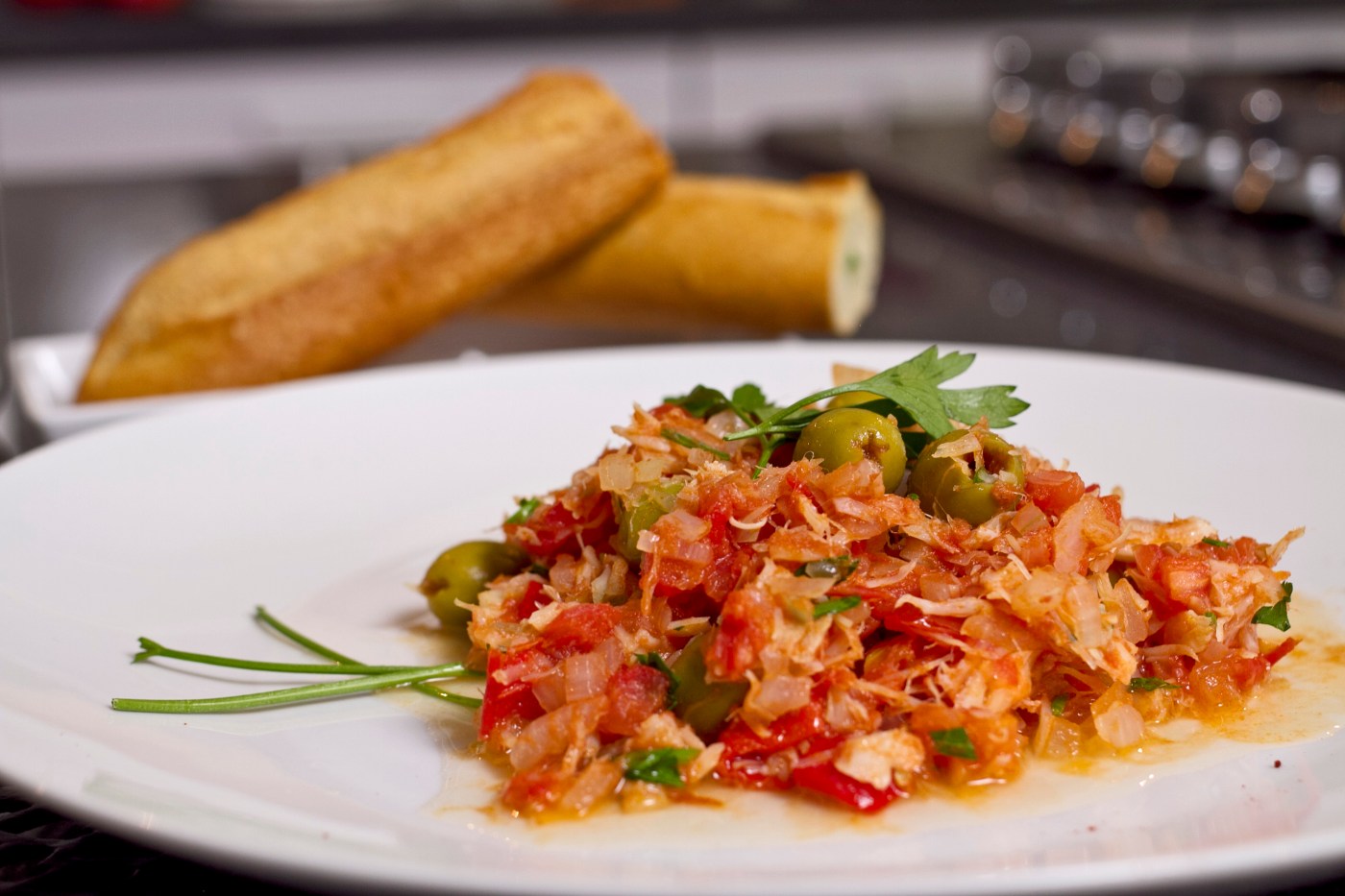
Salted cod is another traditional dish that’s very popular during Christmas time. It’s funny, but I actually didn’t care much for this dish growing up. I have vague memories as a kid of the grown ups in the family praising this dish and how exquisite the combination of flavors tasted. Now that I’ve grown up and tried it myself, though, I can see that they were right: this really is an exquisite dish. The image of the cod simmering with the roasted tomatoes, garlic, onions, olives, parsley, and raisins just makes my mouth water. Yes, I know, I’ve used that expression before, but I just can’t help it when I come across a really great recipe like this one.

Vizcaina Style Salted Cod originated in Spain, and was later adapted by Mexican cooks by adding more ingredients. Not only is salted cod a common dish for Christmas Eve Dinner, but the leftovers are used to make sandwiches (tortas) using French rolls the next day. It’ll actually taste better, since the flavors have had time to fully blend together.

The sauce for this recipe is very similar to the one for the Red Snapper Veracruz Style, just with some extra ingredients, like a variety of pickled peppers known as “Gueros” (very similar to banana peppers). I couldn’t find that particular type of pepper, so I used Pepperoncini peppers instead. Depending on where you live, you can also use Hungarian banana peppers or pickled jalapeños.

If you’re going to try this recipe out, make sure to make enough to have some left over, it tastes better the next day!

MAKES ABOUT 6-8 SERVINGS
INGREDIENTS:

  • 1 1/2 Salted Cod
  • 2 Lbs. Plum Tomatoes
  • 1/4 cup olive oil
  • 1 large onion, thinly sliced
  • 4 garlic cloves, minced
  • 1/3 cup raisins
  • 3/4 cup pitted olives
  • 2 Tablespoons capers, rinsed
  • 1-1/2 teaspoon dried Mexican oregano
  • 1 Lb new potatoes, cooked and peeled*
  • 4 Red peppers, roasted and cut into strips
  • 1 cup parsley, chopped
  • 6 Pickled Guero peppers  (banana, pepperoncinosi or jalapeños peppers will work fine)**
  • Salt and pepper to taste

DIRECTIONS:

  1. Rinse Salted Cod in water for at least 3 times until water comes out clean. As you can see on the top right picture, the water has a lot of salt floating in it. This was the first rinsing. After the 3rd rinse, the water is clear, as shown on the picture at the bottom left. Leave the fish to soak in this water for about 6-8 hours. It will be tender after the soaking time, as you can see on the bottom right picture
  2. Rinse and drain the fish again and place in a large stock pot with clean cold water. Gently simmer over a medium-high heat for about 7 minutes until it is tender. Drain fish and set aside, reserving some of the cooking liquid in case your sauce get dry and you need more liquid.
  3. While the fish is cooling, place tomatoes on a hot griddle to roast.
  4. Roasting the tomatoes will take about 10 minutes. If the fish is already cool enough to handle, shred it finely.
  5. Place roasted tomatoes into a blender and process until you have a smooth sauce. Strain using a sieve and set aside.
  6. Heat the olive oil in a large skillet over medium heat. Add the onion and cook until transparent, about 4 minutes, then stir in the garlic and cook for a couple more minutes. Add the roasted tomato puree and cook for about 5-7 minutes.
  7. As soon as the tomato sauce starts simmering, add the shredded Salted Cod. Stir and cook until the tomato sauce start simmering again, and, one by one, start slowly adding the raisins, olives, and capers. Allow the sauce to simmer and the flavors to blend.  Now, add the potatoes and keep simmering and stirring.
  8. Finally, add the roasted red pepper strips, freshly crumbled Mexican oregano, parsley, and pickled “Guero” peppers. Season with pepper and salt to taste. Remember that the fish was already salted, so be careful not to add salt before tasting the sauce. Keep simmering for about 10-15 more minutes or tomato sauce has reduced.
    http://www.mexicoinmykitchen.com/2014/12/mexican-style-salted-cod-bacalao-vizcaina-mexico.html

How to Make Lobster, Puerto Nuevo Style

Puerto Nuevo is a seaside village in Baja California, Mexico. It was made famous some 50 years ago for its succulent Pacific spiny lobster, which is renowned throughout Southern California.

Back in the old days, local fisherman would cruise up and down the shoreline in their pangas (fishing boats) and dive right off the rocks in search of the best lobsters.

The traditional Puerto Nuevo Lobster is deep fried in lard. They are pan-fried in the lard so the meat of the lobster stays tender and succulent. A good ‘ol Mexican beer or some ice cold coca-cola is a must with this dish. Of course don’t forget the beans, Spanish rice, limes, salsas, and only in Baja you can enjoy a delicious Lobster with rice and beans with a Sonora stile flour tortilla handmade your choice Tequila or beer either way …  Amazing!

Enjoy!, Cindy


INGREDIENTS

Servings: 6

6 large Mexican lobsters

2 cups lard or solid vegetable shortening

Old bay seasoning

Pepper

2 cups frijoles (beans)

2 cups spanish rice

Dozen or two of flour and/or corn tortillas

2 cups Salsa Fresca

2 cups Salsa Verde

PREPARATION

  • Bring a pot of water mixed with a little Mexican beer, to a boil. Throw in a bit of old bay seasoning.

  • Put the lobsters in for about 3 minutes. They won’t be thoroughly cooked.

  • Heat lard or vegetable shortening, in a heavy deep skillet.

  • Split the lobsters in half lengthwise and remove the green tamale inside.

  • Season the lobster halves with old bay seasoning and pepper.

  • Pan-fry each lobster halve for about 5 minutes on each side, until meat is tender and crisp.

  • Drain on paper towels.

  • You can serve them right away or place them in a warm oven until ready to serve.

Serve up your Puerto Nuevo Lobsters with frijoles, rice, tortillas, lime and salsas. You can eat the lobster either in a burrito or taco or just by themselves. Use the tortillas to scoop and mop up your beans, rice, excess pan juices and salsas – the Mexican way!

What is going on with Volkswagen?

Volkswagen: The scandal explained
25 September 2015

It’s been dubbed the “diesel dupe”. The German car giant has admitted cheating emissions tests in the US. According to the Environmental Protection Agency (EPA), some cars being sold in America had devices in diesel engines that could detect when they were being tested, changing the performance accordingly to improve results.

VW has had a major push to sell diesel cars in the US, backed by a huge marketing campaign trumpeting its cars’ low emissions. The EPA’s findings cover 482,000 cars in the US only, including the VW-manufactured Audi A3, and the VW brands Jetta, Beetle, Golf and Passat. But VW has admitted that about 11 million cars worldwide are fitted with the so-called “defeat device”.

The device sounds like a sophisticated piece of kit

Full details of how it worked are sketchy, although the EPA has said that the engines had computer software that could sense test scenarios by monitoring speed, engine operation, air pressure and even the position of the steering wheel.

When the cars were operating under controlled laboratory conditions – which typically involved putting them on a stationary test rig – the device appears to have put the vehicle into a sort of safety mode in which the engine ran below normal power and performance. Once on the road, the engines switched from this test mode.

The result? The engines emitted nitrogen oxide pollutants up to 40 times above what is allowed in the US.

What has been VW’s response?

The case against VW appears cast-iron. “We’ve totally screwed up,” said VW America boss Michael Horn, while group chief executive Martin Winterkorn said his company had “broken the trust of our customers and the public”. An internal inquiry has been launched.

With VW recalling almost 500,000 cars in the US alone, it has set aside €6.5bn (£4.7bn) to cover costs. But that’s unlikely to be the end of the financial impact. The EPA has the power to fine a company up to $37,500 for each vehicle that breaches standards – a maximum fine of about $18bn.

Legal action from consumers and shareholders may follow, and there is speculation that the US Justice Department will launch a criminal probe.

How widespread are VW’s problems?

What started in the US has spread to a growing number of countries. The UK, Italy, France and South Korea, Canada and, of course, Germany, are opening investigations. Australia says it is monitoring the situation. Throughout the world, politicians, regulators and environmental groups are questioning the legitimacy of VW’s emissions testing. France’s finance minister Michel Sapin said a “Europe-wide” probe was needed in order to “reassure” the public.

At this time, only cars in the US named by the EPA are being recalled, so owners elsewhere need take no action. However, with about 11 million VW diesel cars potentially affected – 2.8 million cars in Germany itself – further costly recalls and refits are possible. Half of the company’s sales in Europe – VW’s biggest market – are for diesel cars. No wonder the carmaker’s shares plunged around 30% in the first couple of days after the scandal broke – with other carmakers also seeing big falls in their stock prices.

Will more heads roll?

Chief executive Martin Winterkorn has resigned, although he denies wrongdoing. It’s still unclear who knew what and when, although VW must have had a chain of management command that approved fitting cheating devices to its engines, so further departures are likely.

Christian Klingler, a management board member and head of sales and marketing is leaving the company, although VW said this was part of long-term planned structural changes and was not related to recent events.

In 2014, in the US, regulators raised concerns about VW emissions levels, but these were dismissed by the company as “technical issues” and “unexpected” real-world conditions. If executives and managers wilfully misled officials (or their own VW superiors) it’s difficult to see them surviving.

Are other carmakers implicated?

That’s for the various regulatory and government inquiries to determine. California’s Air Resources Board is now looking into other manufacturers’ testing results. Ford, BMW, and Renault-Nissan said they did not use “defeat devices”, while other firms had yet to respond or simply stated that they complied with the laws.

The UK trade body for the car industry, the SMMT, said: “The EU operates a fundamentally different system to the US – with all European tests performed in strict conditions as required by EU law and witnessed by a government-appointed independent approval agency.”

But it added: “The industry acknowledges that the current test method is outdated and is seeking agreement from the European Commission for a new emissions test that embraces new testing technologies and is more representative of on-road conditions.”

That sounds like EU testing rules need tightening, too

Environmental campaigners have long argued that emissions rules are being flouted. “Diesel cars in Europe operate with worse technology on average than the US,” said Jos Dings, of the pressure group Transport & Environment. “Our latest report demonstrated that almost 90% of diesel vehicles didn’t meet emission limits when they drive on the road. We are talking millions of vehicles.”

Car analysts at the financial research firm Bernstein agree that European standards are not as strict as those in the US. However, the analysts said in a report that there was therefore “less need to cheat”. So, if other European carmakers’ results are suspect, Bernstein says the “consequences are likely to be a change in the test cycle rather than legal action and fines”.

It’s all another blow for the diesel market

Certainly is. Over the last decade and more, carmakers have poured a fortune into the production of diesel vehicles – with the support of many governments – believing that they are better for the environment. Latest scientific evidence suggests that’s not the case, and there are even moves to limit diesel cars in some cities.

Diesel sales were already slowing, so the VW scandal came at a bad time. “The revelations are likely to lead to a sharp fall in demand for diesel engine cars,” said Richard Gane, automotive expert at consultants Vendigital.

“In the US, the diesel car market currently represents around 1% of all new car sales and this is unlikely to increase in the short to medium term.

“However, in Europe the impact could be much more significant, leading to a large tranche of the market switching to petrol engine cars virtually overnight.”

Chiles en Nogada

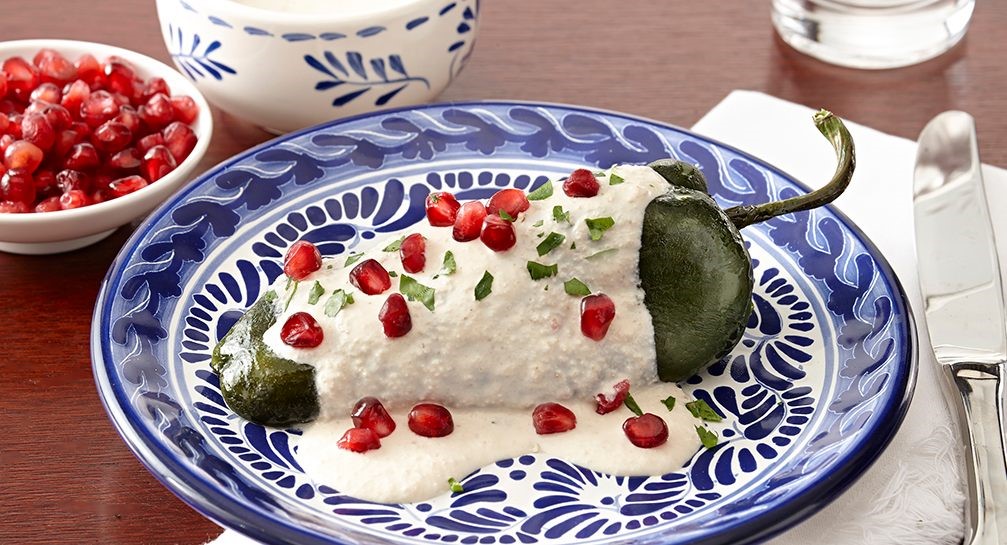
The traditional chile en nogada is from Puebla; it is tied to the independence of this country since it is said they were prepared for the first time to entertain the emperor Agustín de Iturbide when he came to the city after his naming as Agustín I. This dish is a source of pride for the inhabitants of the state of Puebla. (Wikipedia)
I suggest you have it at least once, trust me you wont regret it.

INGREDIENTS

FOR THE FILLING:
8 oz. pork loin

2 cloves garlic, peeled, plus 2 finely chopped

1 large white onion, halved

Kosher salt, to taste

2 tbsp. lard (available at emperorfood.com) or canola oil

2 tbsp. finely chopped parsley

3 plum tomatoes, cored, peeled, and finely chopped

2 tbsp. raisins

2 tbsp. finely chopped blanched almonds

½ Granny Smith apple, peeled, cored, and finely chopped

½ pear, peeled, cored, and finely chopped

½ peach, peeled, pitted, and finely chopped

½ medium ripe plantain or banana, peeled and finely chopped.

FOR THE WALNUT SAUCE:

4 oz. walnuts

½ cup milk

6 oz. queso fresco (available at mexgrocer.com)

1 cup crema (available at mexgrocer.com) or sour cream

2 tbsp. sherry

3 tbsp. sugar

Kosher salt, to taste

FOR THE CHILES:

12 poblano chiles

2 cups canola oil, for frying

1 cup flour

5 eggs, separated

2 tbsp. kosher salt

1 tbsp. distilled white vinegar

Seeds of 1 pomegranate

INSTRUCTIONS

  1. Make the filling: Bring pork, 2 whole cloves garlic, half the onion, and 2 cups water to a boil in a 4-qt. saucepan over medium-high heat; season with salt, reduce heat to medium-low, and cook, covered, until pork is tender, about 1 hour. Transfer pork to a cutting board, and pour cooking liquid through a fine strainer into a bowl; reserve ½ cup cooking liquid, and discard any remaining along with solids. Once cool, finely chop pork, and set aside with cooking liquid. Return saucepan to medium-high heat, and add lard; finely chop remaining onion, and add to pan along with minced garlic, and cook, stirring, until soft, about 8 minutes. Add parsley and tomatoes, and cook, stirring, until tomatoes break down, about 5 minutes. Return pork and cooking liquid to pan along with raisins, almonds, apple, pear, peach, and plantain, and cook, stirring occasionally, until fruit is cooked through and mixture is thick, about 10 minutes. Remove from heat, and season with salt; set aside.
  2. Make the walnut sauce: Place walnuts in a 2-qt. saucepan, and cover with water; bring to a boil, and cook for 5 minutes. Drain, and use a stiff-bristled brush to peel away most of the skin from walnuts; set aside. Bring milk to just under a boil in a 2-qt. saucepan over medium-high heat, and add walnuts; let sit, covered, to soften nuts, about 30 minutes. Transfer walnuts and milk to a blender along with queso fresco, crema, sherry, and sugar, and puree until very smooth and thick, at least 2 minutes. Season with salt, and transfer to a bowl; cover and refrigerate until ready to use.
  3. For the chiles: Heat broiler to high. Place poblano chiles on a foil-lined baking sheet and broil, turning, until blackened all over, about 20 minutes. Transfer chiles to a bowl, and let cool. Peel and discard skins, stems, and seeds, and cut a slit down the length of each chile. Remove and discard seeds and ribs, keeping chile intact. Place about 2-3 tbsp. filling inside each chile, and close chile around filling to form a tight roll. Refrigerate until ready to use.
  4. Heat oil in a 12″ skillet over medium-high heat. Meanwhile, place flour on a shallow plate, and set aside. Beat egg whites in a bowl until soft peaks form; whisk in egg yolks, salt, and vinegar. Working in batches, dredge each chile in flour, shaking off excess, and then coat in egg batter. Place in oil, and fry, flipping once, until golden brown and filling is heated through, about 5 minutes. Using a slotted spoon, transfer chiles to a wire rack to drain. Transfer to serving plates, and spoon walnut sauce over chiles to cover completely; sprinkle with pomegranate seeds before serving.

http://www.saveur.com/article/Recipes/Mexico-Poblano-Walnut-Sauce

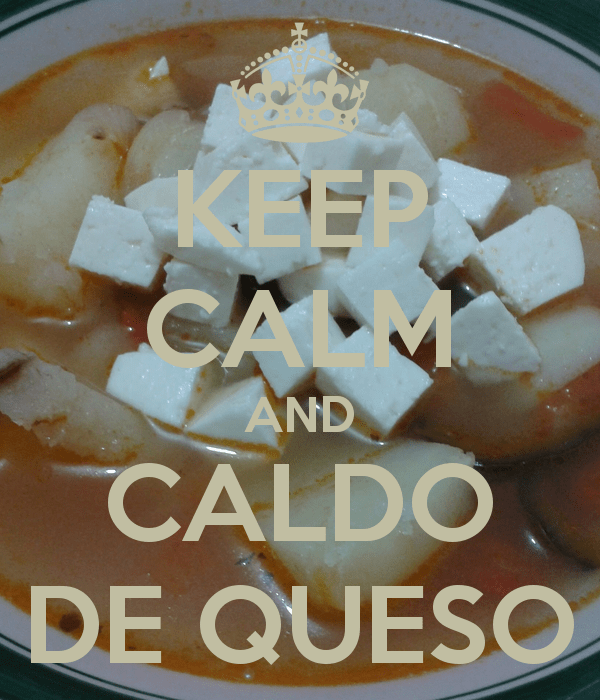
Receta de Caldo de queso – Cheese Soup Recipe

Receta de Caldo de queso
Cheese Soup Recipe

Ingredients:

2 tablespoons Extra virgin olive oil
1 medium onion, chopped
3 garlic cloves,minced
1 medium  potato, peeled and cubed
 1/4 cup  green chiles roasted and peeled
 1 quart  hot chicken or beef broth
 1 cup mozzarella cheese grated
Salt and freshly fround pepper
Fresh cilantro
 4 limes
Way of cooking….

Heat oil in skillet over medium heat. Saute onion, garlic, potato and chiles for 3 minutes. Place in a pot with hot broth, bring to a boil. Lower heat and simmer for 25 minutes. Add 1/2 of the cheese and simmer until cheese melts. Serve in soup bowls. Garnish with a sprig of cilantro. Sprinkle some cheese and add 2 slices of lime. Have corn chips or hard rolls with soup.
(Serves 6)

Create a free website or blog at WordPress.com.

Up ↑